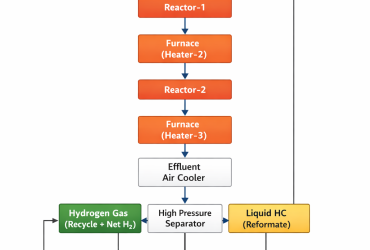
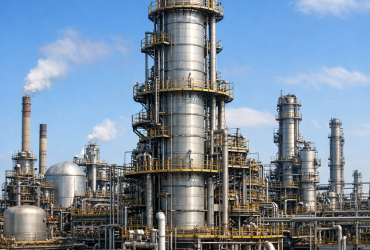
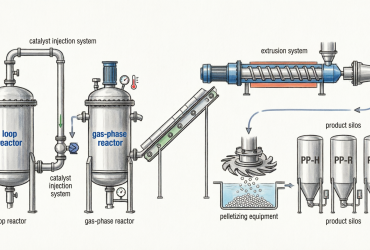
Common issues include high pressure drop, low hydrogen purity, catalyst fouling, and high reactor temperature. Troubleshooting involves monitoring process parameters, checking feed quality, and performing equipment inspections.
Technical knowledge Hub
Operator Zone – Technical knowledge hub Latest Questions
✔ Captures metal impurities before they reach the main catalyst.✔ Prevents catalyst poisoning and extends life.
✔ Arsenic, vanadium, and nickel in the feed cause poisoning.✔ Water or oxygen exposure deactivates the catalyst.
✔ Hydrogen breaks S-C bonds, converting sulfur compounds into H₂S.✔ Prevents coke formation by saturating olefins.
🔹 Causes of catalyst deactivation:✔ Coking – Formation of carbon deposits.✔ Metals Deposition – Vanadium & nickel accumulation.✔
✔ Cobalt-Molybdenum (Co-Mo) on Alumina – Used for low-sulfur feeds.✔ Nickel-Molybdenum (Ni-Mo) on Alumina – More active, used for high-sulfur feeds.
🔹 Reactor temperature is controlled by:✔ Preheater adjustments – Regulates feed temperature.✔ Quench Hydrogen Injection – Reduces excessive heat in exothermic reactions.✔ Reactor Bed Temperature ...