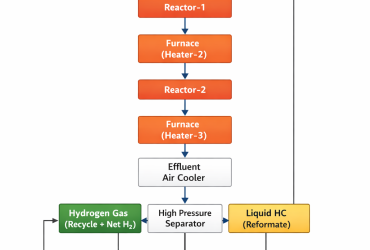
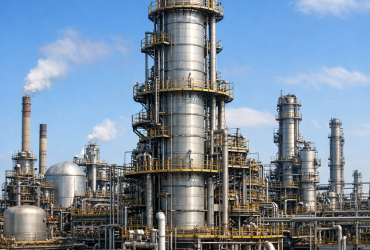
An Isomerization Unit in a refinery is a process unit used to convert straight-chain hydrocarbons (mainly naphtha) into branched-chain hydrocarbons to increase their octane rating. This process is particularly important for improving the quality of gasoline, as higher-octane fuels are ...
Technical knowledge Hub
Operator Zone – Technical knowledge hub Latest Questions
The CDU, or Crude Distillation Unit, is a vital component in a refinery. It is the first major unit that processes crude oil after it is delivered to the refinery. The primary function of the CDU is to separate crude ...
Saqlain AbbasBegginer
Distillation is a separation process that is used to separate a mixture of liquids or gases into its components based on their different boiling points. It works by heating the mixture to a temperature at which one or more components ...
Vacuum Distillation is a special type of distillation process that is used to separate components of a mixture by lowering the pressure (creating a vacuum) in the distillation system. This process helps to reduce the boiling points of the components, ...
Vaporization and evaporation are both processes by which a liquid changes into a gas, but they occur under different conditions and have distinct characteristics. Here’s a breakdown of the key differences between the two: Vaporization: Definition: Vaporization is the process by which ...
Saqlain AbbasBegginer
Sour Crude refers to crude oil that contains a relatively high amount of sulfur (usually more than 0.5% by weight). This sulfur content makes it “sour,” as opposed to “sweet” crude, which has lower sulfur content. The sulfur compounds present ...
Saqlain AbbasBegginer
The FCC (Fluid Catalytic Cracking) unit is one of the most important and widely used processes in petroleum refineries. It is used to convert heavy, high-boiling-point hydrocarbons from crude oil into lighter, more valuable products such as gasoline, diesel, propane, ...